
Why Summer in Coppell Is Making Your Dry Eye Symptoms Worse
Why Summer in Coppell Is Making Your Dry Eye Symptoms Worse
Summer in Coppell brings more time outdoors, stronger sunlight, air-conditioned spaces, and changes in daily routines. While these seasonal shifts may seem harmless, they can disrupt the tear film that keeps your eyes comfortable and protected. For people already experiencing dry eye, summer conditions often lead to increased burning, redness, irritation, and watery eyes.
Heat, Wind, and Outdoor Exposure
Warm weather encourages outdoor activities, but moving air and wind can cause tears to evaporate more quickly. Driving with the windows down, sitting near outdoor fans, biking, and spending time around dust or smoke may leave your eyes feeling gritty or tired.
Bright sunlight can also make dry eyes feel more sensitive. Wearing quality wraparound sunglasses helps reduce exposure to sunlight, wind, and airborne debris while you are outdoors.
Air Conditioning Can Dry Out Your Eyes
Air conditioning provides relief from the Coppell heat, but continuously cooled air may reduce moisture around your eyes. Direct airflow from ceiling fans, car vents, or office air conditioning can make tear evaporation worse.
Try redirecting vents away from your face and using a humidifier in rooms where the air feels especially dry. These small adjustments may help improve comfort throughout the day.
Summer Allergies Can Add to the Irritation
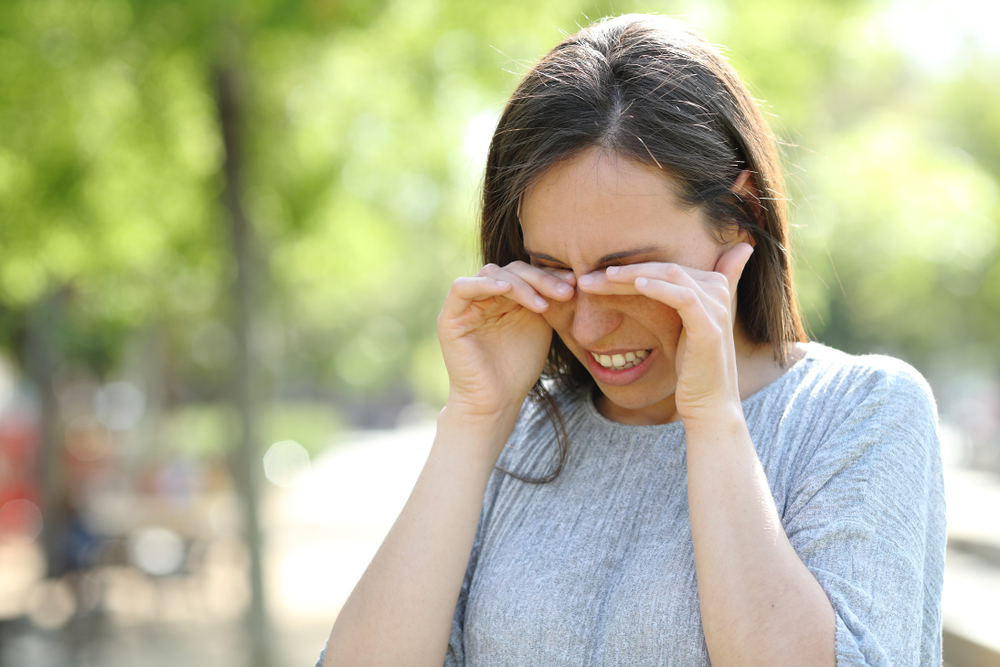
Seasonal allergens can cause itching, redness, and excessive watering. Rubbing itchy eyes may further irritate the surface of the eye and worsen dry eye symptoms. Some allergy medications may also contribute to dryness.
Because allergies and dry eye can produce similar symptoms, it is important to identify the underlying cause before choosing treatment. Using the wrong eye drops may provide only temporary relief or make irritation worse.
Signs Your Dry Eye Needs Attention
Dry eye symptoms are not always limited to a dry sensation. Schedule an evaluation if you regularly experience:
• Burning, itching, or stinging
• Red or bloodshot eyes
• A gritty feeling or sensation that something is in your eye
• Sensitivity to sunlight or bright indoor lighting
• Blurry or fluctuating vision
• Excessive tearing or watery eyes
• Contact lens discomfort
Simple Ways to Protect Your Eyes This Summer
Staying hydrated, taking regular screen breaks, wearing sunglasses, and avoiding direct airflow may reduce mild symptoms. Consistent eyelid hygiene may also help support healthy oil glands along the eyelids.
However, artificial tears alone may not address chronic dry eye. Symptoms can develop from meibomian gland dysfunction, blepharitis, allergies, inflammation, reduced tear production, medications, or several overlapping factors.
Personalized Dry Eye Treatment in Coppell
A dry eye evaluation helps determine why your symptoms are occurring. At Vision Source Coppell / Elliott Eye Associates, we use diagnostic methods such as meibomian gland imaging and tear film osmolarity measurements to better understand each patient’s condition.
Depending on the findings, treatment may include prescription eye drops, oil gland treatment, blinking exercises, eyelid hygiene, or medication when infection is present. A personalized approach targets the source of the problem rather than simply masking summer discomfort.
Schedule your dry eye evaluation with Vision Source Coppell / Elliott Eye Associates to learn more about personalized treatment options. Contact our office in Coppell, TX, by calling (972) 393-8600 today.
Helpful Articles
All Eye Care Services
Find personalized eye care excellence with our comprehensive services. From eye exams to advanced diagnostics, trust us for all your vision needs.

Keep In Touch
For non-urgent questions or to learn more about our services, contact us today!
© 2026 Vision Source Coppell / Elliott Eye Associates. All rights Reserved - Accessibility Statement - Privacy Policy - Sitemap
Managed and Designed by 